



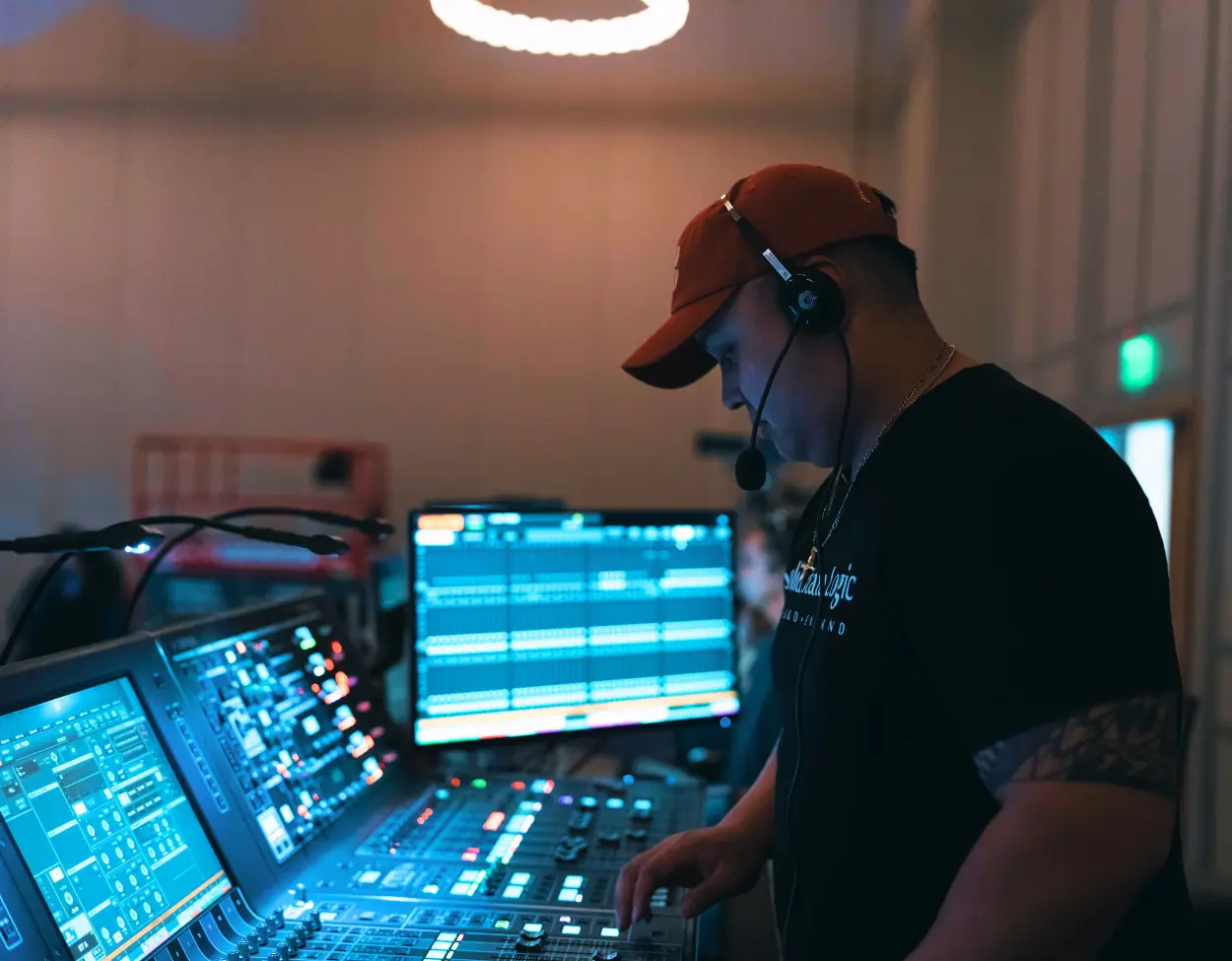
To most event guests, the audio engineer is the person behind a big board with a lot of blinking lights and faders, usually wearing headphones and looking incredibly focused. They rarely get applause, they don’t take the mic, and if they’re doing their job right—you might not even notice them at all.
But make no mistake: the audio engineer is the invisible force holding the entire show together.
From corporate keynotes and weddings to concerts and festivals, the audio engineer is the one responsible for making sure everything sounds exactly as it should—crisp, clear, balanced, and beautiful. Let’s pull back the curtain and see what really goes on behind the board.
It All Starts Before the Show Begins
You might think the magic begins when the first mic is turned on—but an audio engineer’s work starts long before that. Load-in, sound check, and system configuration are crucial steps. First, the engineer evaluates the space. Every room or venue has its own acoustic challenges. Is there echo? Low ceilings? A noisy crowd? Outdoor wind? These variables determine how the sound system should be set up. From there, they’ll configure the PA system, test microphones, run line checks, and dial in the mixing console settings. It’s all about planning for a perfect performance—even when the unexpected inevitably happens.During the Show
Once the show starts, the audio engineer’s job shifts into real-time execution. And no, they’re not just sitting back and pressing “play.” Here’s what they’re actively doing:- Balancing Levels: Ensuring the vocals, instruments, and background music are all at the right volume and blend well together.
- Managing Feedback: Instantly addressing any screeching or ringing that could derail a speech or performance.
- Mic Control: Muting and unmuting mics at the right time. (Trust us, you don’t want a hot mic catching side conversations backstage.)
- Mixing for the Room: Continuously adjusting EQ and gain to accommodate changes in crowd noise, speaker positions, and dynamics.
- Cueing Audio Tracks: Playing back audio intros, background music, or video sound when triggered by cues from producers or show directors.
- Coordinating with the Team: Communicating with lighting operators, stage managers, and techs to ensure everything is in sync.